Nataliia Serebriakova
At the Cannes Film Festival, Natalija Serebriakova spoke with Sandra Wollner, director of Every Time, at the request of Scanorama. S. Wollner discussed the creative process behind Every Time, its themes of grief and memory, working with actors, and the importance of intuition in filmmaking.
Every Time is a sombre family drama about a holiday that ultimately never happens. The film follows a mother, her daughter and a teenager accused of causing a tragic death as they set off on a trip to Tenerife. The holiday is meant to be an escape from the past, but on the sunny island, what cannot be escaped begins to emerge more clearly: grief, guilt, responsibility and the fragile path towards forgiveness.
– Could you tell us a little about how you began making this film? What inspired you?
– We were talking earlier about my father’s death, but in fact that happened later – the screenplay had already been written by then. So it wasn’t the film’s original starting point. Of course, it left its mark on the screenplay later, but the initial idea came from people I had met in my life: from the impressions they left, which later echoed in the film’s characters. These are certainly not direct portraits of real people. They are more like fragments – impressions left by people that stay with you and become etched in your memory.
As you go through different moments in life, you meet people who stay with you, and later their traits blend with those of others you have met.
At the very beginning, I was drawn to an image: a mother lying in bed and listening to the simplest everyday sounds – footsteps outside, a key turning in the lock – as if reliving her daughter’s return home once again. Even though, of course, that is no longer possible in reality.
To some extent, I felt that such simple everyday sounds could become a cruel reminder of loss. Later, after my father died, I understood this even more deeply. I think many people know the feeling: after losing someone close, they can remain connected to very small, almost insignificant things – a phone ringtone, or a particular time of day when the phone used to ring.
Those small sounds seemed very interesting to me, but also cruel, because they force the present and the past together. I really wanted to follow that feeling. That’s where it all began.
Later, my attention turned to the relationship between the mother and the teenager accused of her daughter’s death. They both find themselves on the threshold between darkness and light – in an emotional and psychological state where several truths can exist at once. I think we all recognise this situation from life, although it is usually more comfortable for us to believe that there is only one truth.
For him, both truths exist at once: he feels innocent, but at the same time cannot shake off his guilt – after all, he was the last person to see her alive.
– Yes, that happens very often when people are grieving.
– Exactly. She wants to forgive him, but she can’t. They are both stuck in this ambiguity and cannot escape it. To some extent, I felt that they needed each other precisely so they could remain in this state. He truly longs for forgiveness, but cannot accept it. So he almost needs the pain – perhaps because of the guilt he feels. I was very interested in this state in which several truths exist at the same time.
– Grief can’t follow a clear plan, can it?
– No. Although people often talk about clear stages of grief, in reality they constantly overlap. It doesn’t go: now you’re in denial, now you’re angry, and now you’ve accepted it. It all happens at once. Even after reaching acceptance, you can return to anger or denial.
– The subject of family seems very important to you – it is prominent in some of your earlier films, too. How did you develop the screenplay for this story?
– As I mentioned, I followed the images. First there was the mother, then I heard the sounds, and the story began to take shape from there. Sometimes an image would arise: a mother, a teenager and a little sister sitting in a park, while she tries to connect with her daughter’s friends – as if that could fill the emptiness her daughter left behind.
After that, everything becomes a fairly organic process. I start writing and see where it takes me. Of course, I can’t avoid the usual work of writing a screenplay, where I constantly check the direction the story is taking. But I’m especially drawn to a more literary kind of writing, almost like prose, where rhythm and language lead the way.
Sometimes I try to surprise myself, or let the subconscious guide the process. Of course, you end up writing a lot of material that doesn’t work and has to be thrown away later. But at the same time, you discover moments that feel essential – those are what I try to preserve.
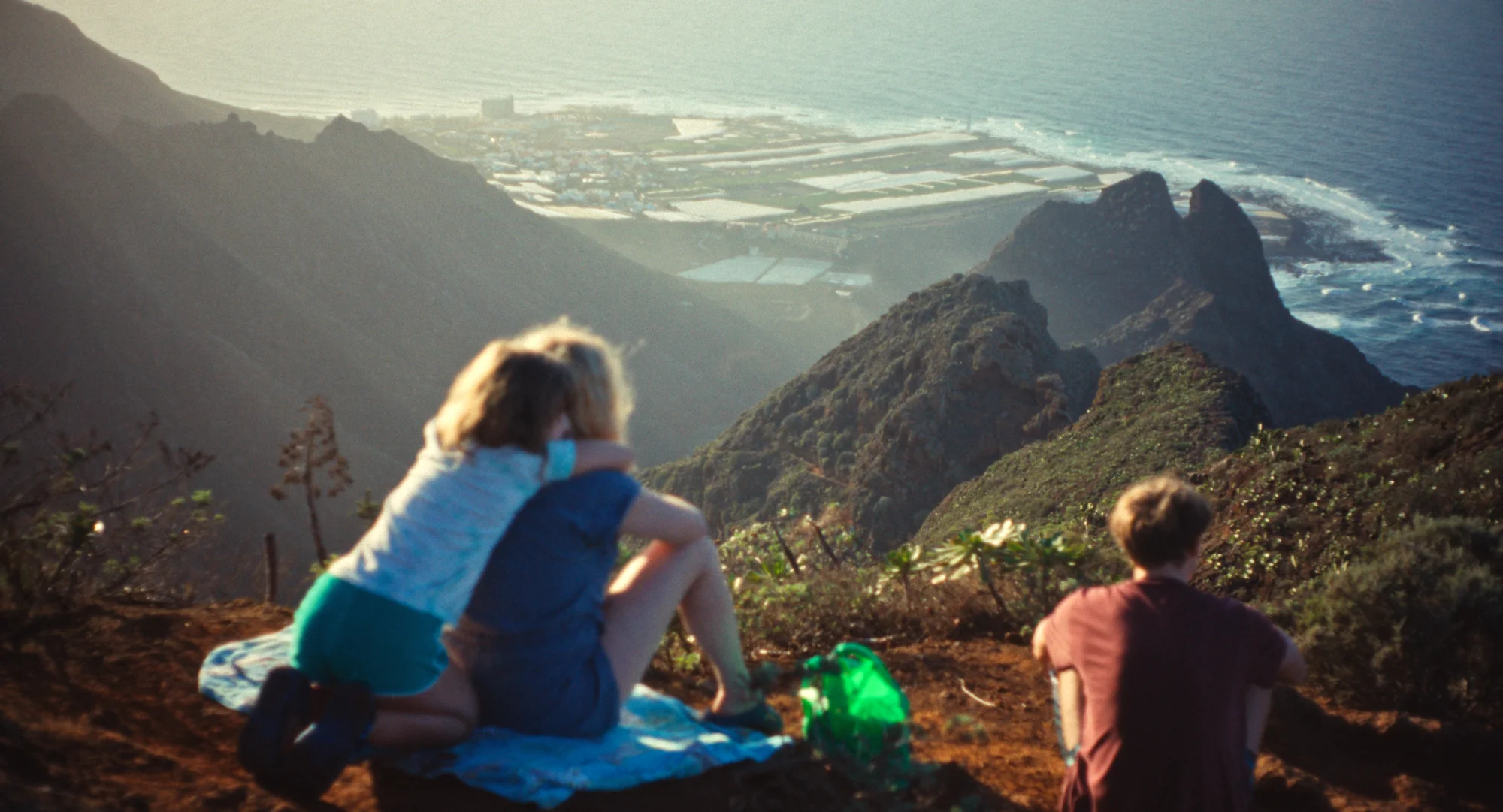
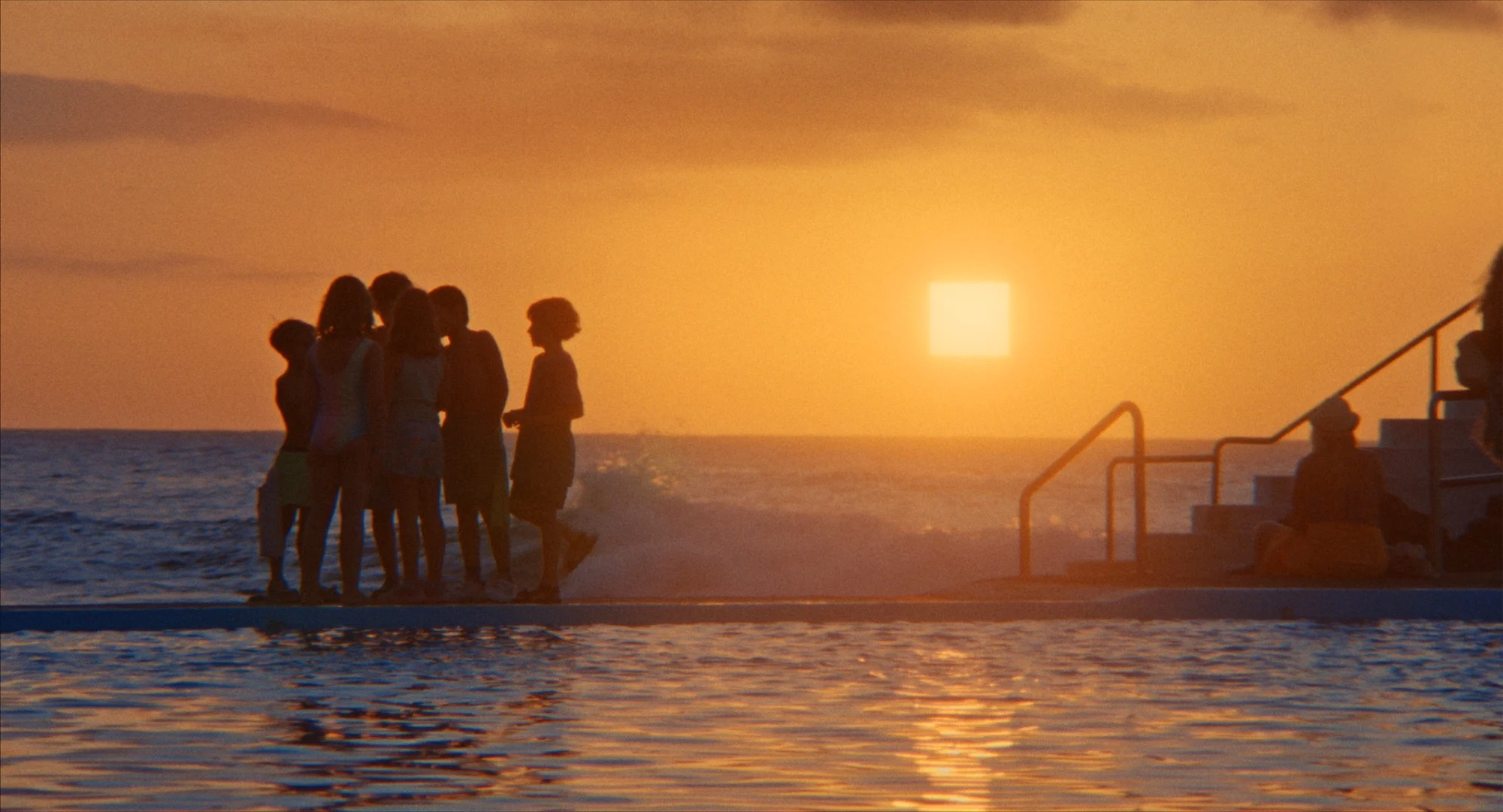
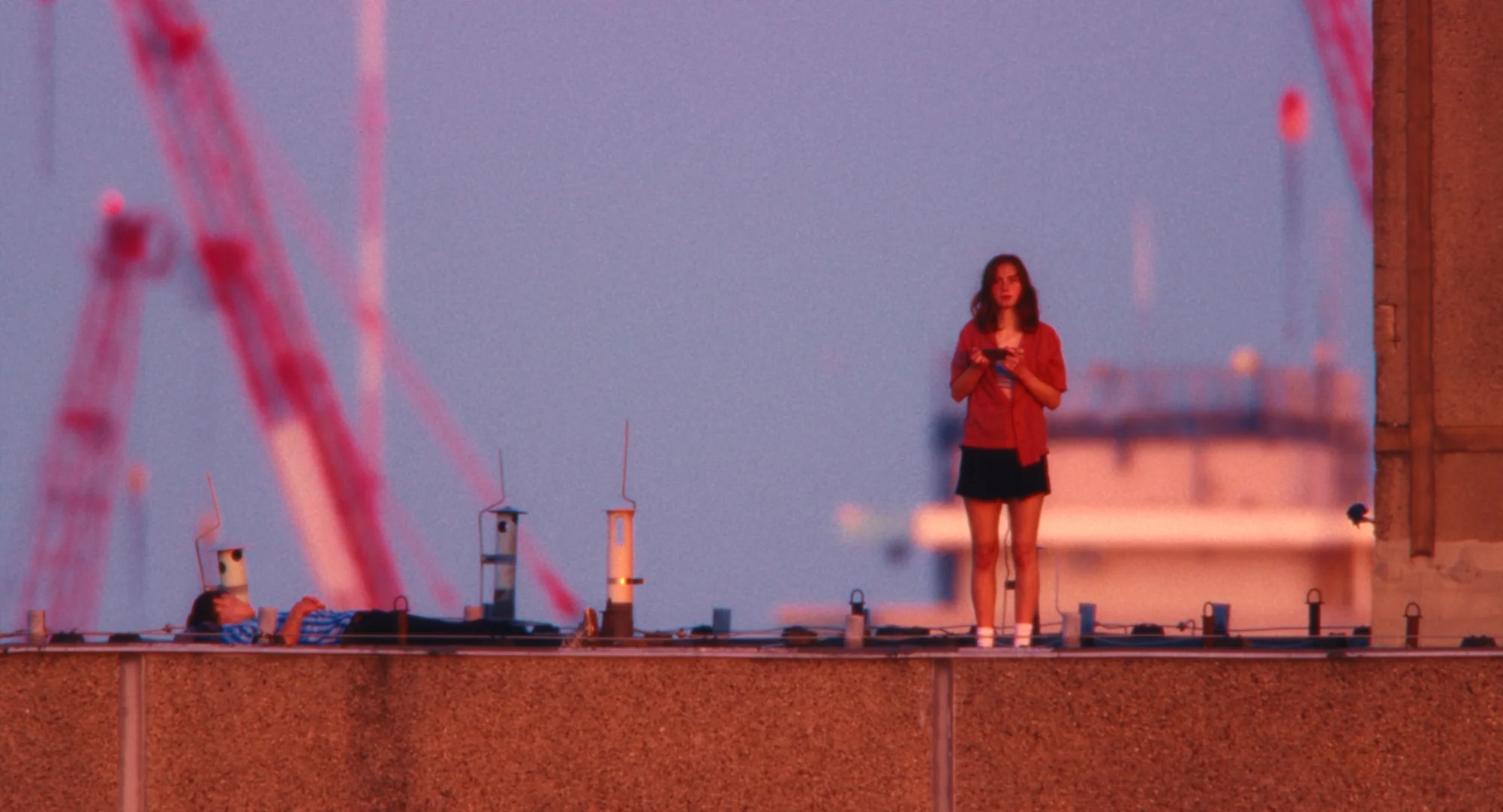
Stills from Every Time
In cinema, more than in other art forms, there is often a tendency to make everything completely understandable and convincing. Viewers often say, “I don’t understand this character; I can’t identify with them – why are they behaving this way?”
But in life – as in music or other arts – it is essential to leave room for complexity. We don’t experience things only with our minds; we experience them emotionally and through our senses. So these complex things need space, care and the right people around them to unfold.
– You mentioned complexity. You live and work in Berlin.
– Yes, I live in Berlin. But I’m originally from Austria.
– Does the atmosphere in Berlin connect with that complexity in any way for you? People often say that the party in Berlin never ends. Your film ends with a very inward-looking moment, almost suspended between states.
– That’s an interesting thought. To be honest, I hadn’t thought about it myself. Parties aren’t as close to me now, but I had never connected these things. I think I could agree with that interpretation.
– I live in Berlin too, and I find the atmosphere of Berlin in your film very recognisable – especially in the way family life is portrayed.
– Yes.
– I really like Birgit Minichmayr. She’s a wonderful actress. What was it like working with her?
– I simply adore her. She is wonderful everywhere: in film and in theatre.
In a way, everyday life is important in this film, too, but something deeper gradually begins to emerge beneath its surface.
How did I work with her? She read a lot about grief and how people cope with it. That was part of her preparation. We also talked a lot about her character and the teenager. It was important to me that she be someone who is constantly between different states, unable to resolve the situation completely.
She tries to do the right thing even when she speaks cynically or sharply. For example, when the boy breaks down and starts crying, she can’t help comforting him. But at the same time, she asks why he acted the way he did.
This moment is like a microcosm of the whole plot. Where is the truth here? There is no single answer. Birgit has an extraordinary ability to show unspoken emotions – what lies beneath the surface. You look at her face and see her thoughts. The feeling is almost transcendent.
– Speaking of cinematographer Gregory Oke… He’s simply wonderful. Your film is often compared to Aftersun (directed by Charlotte Wells, 2022), another film about grief. How did you meet him?
– I watched Aftersun with my partner, who is also a director and the cinematographer on my two previous films. We both immediately fell in love with his work and said, “This person has to be our cinematographer.”
Then we started looking for him. It was difficult to find him online, but eventually we managed to get in touch through mutual acquaintances. We met, and it soon became clear that we had a very similar approach to cinema.
We talked for a long time – at first not just about cinema, but also about how we wanted to work. We even considered shooting on film, but in the end the budget wouldn’t allow it, so we chose digital. Gregory is more drawn to film; he values its materiality, so switching to digital wasn’t easy for him technically. Still, creatively, the decision worked out.
– A video game appears in the film, too, so the digital dimension eventually fits in quite naturally.
– Yes, I agree. I also found it very interesting to work this way. But I understand that the physical aspect of film is very important to him. He is a filmmaker himself, so we never talked only about where to place the camera – we were always looking for a shared vision.
– Your style sometimes brings to mind the Berlin School – the early films of Angela Schanelec and Maren Ade. Was that a deliberate choice?
– I don’t look at it that way myself. I really like their films. Maren Ade is also a kind of mentor to me. Her work has always been a great inspiration. I also have a lot of respect for Angela Schanelec’s films.
– I would say your film is warmer.
– I think it’s quite different. I was more interested in the idea of its form: starting with what seems like a very concrete, down-to-earth family drama, and then turning a corner very slowly, almost imperceptibly, and ending up somewhere completely different.
I wouldn’t want that to sound as if I were comparing myself to Haruki Murakami or anyone like that – I certainly wouldn’t do that. But in a way, I’m inspired by what I associate with his writing: a gentle slide into the surreal while remaining firmly grounded in reality. You begin in a very concrete, everyday world; then it shifts almost imperceptibly, and suddenly you are somewhere else entirely.
That is exactly what I was aiming for. But I should probably describe it more precisely, because comparisons like these are always risky – they can instantly lead people’s thoughts somewhere other than where you intended.
– One might say the storytelling here is exceptionally carefully constructed and full of detail. It is built from small moments and barely noticeable details. We don’t know everything about this family, but we feel connected to them right away. How do you approach creating this kind of storytelling?
– To be honest, I don’t have a strict system. Sometimes my editor and I try to map everything out in diagrams – I’m working on two films at the moment – but they never fully explain what is happening. It feels as though new dividing lines keep appearing everywhere, and the structure is constantly moving and changing.
What matters more to me is capturing a feeling or a rhythm. I try to trust my intuition and let it guide me. I don’t always try to explain everything rationally. Of course, sometimes that is necessary – then I start analysing what works and why.
But I’m more interested in how one scene connects to another, what kind of connection or resonance they create. How does one moment echo in another? What kind of atmosphere emerges between them?
To be honest, I doubt I could put it any more precisely.