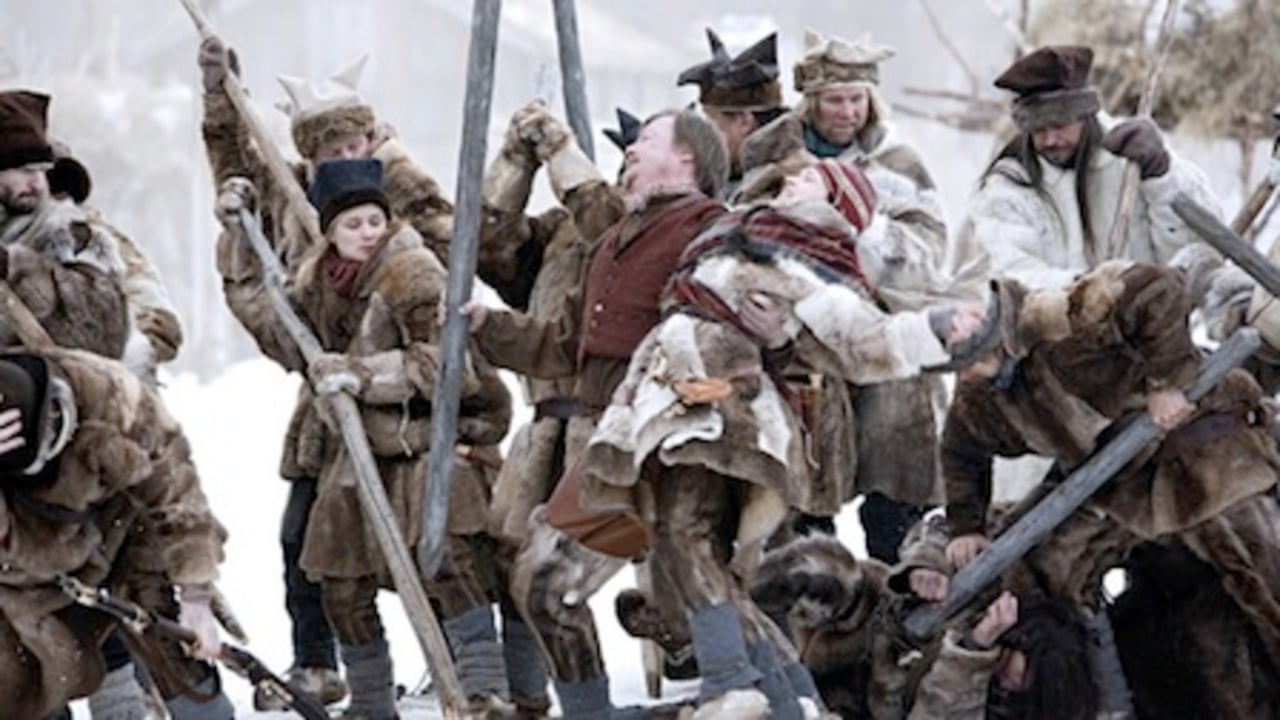
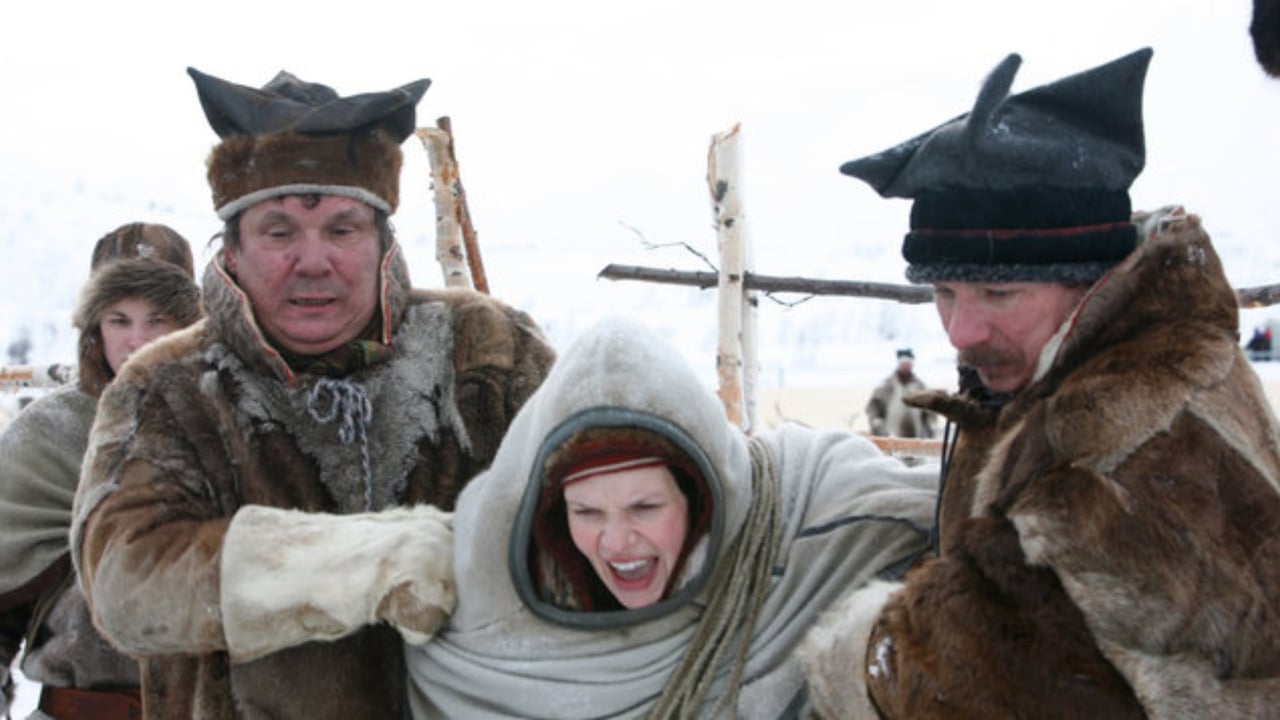
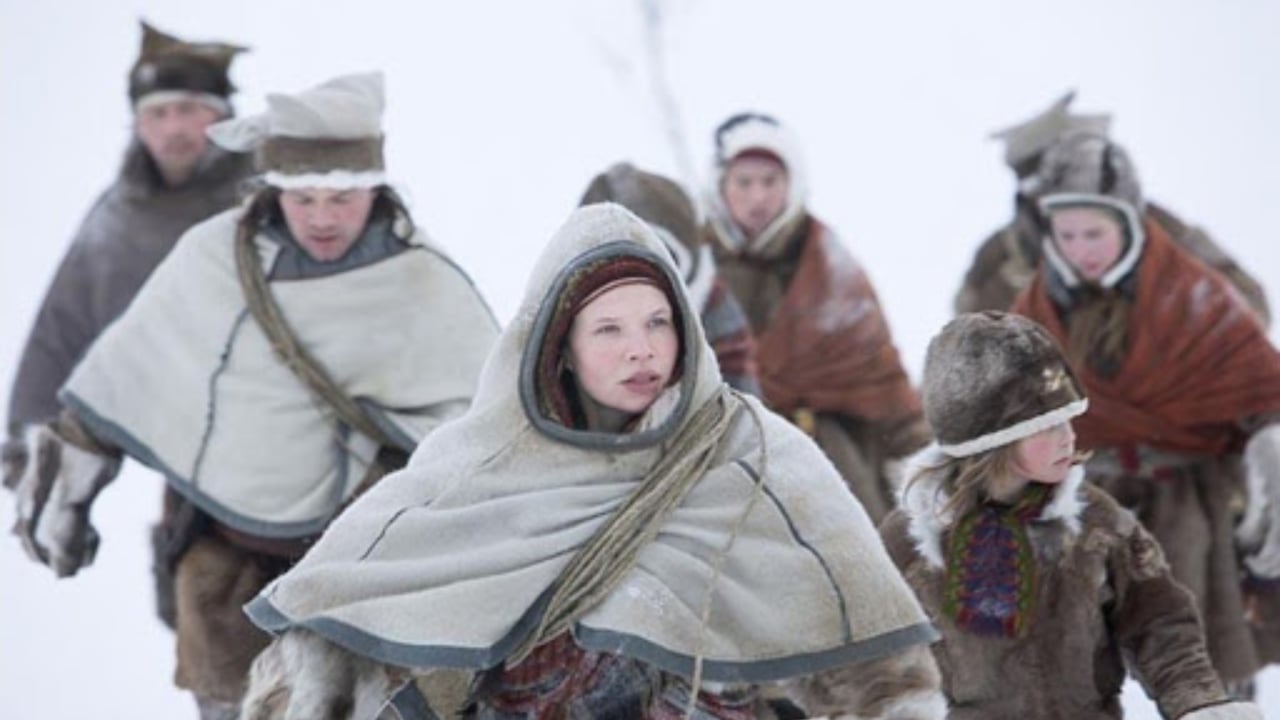
For centuries, the Sami and their deer lived in the plateaus of northern Scandinavia. Unfortunately, the modernization will soon enter the village of Kautokeino, which is run by the rich and fierce alcohol salesman Ruth (Michael Persbrandt). One tribe, led by a young woman, Elen, refuses to pay tribute to Ruth. Without any trial, Ruth imprisones almost the entire Elen tribe, leaving her alone to take care of all the animals. The woman gets help, a court is convened, the tribe is released, but Ruth asks to give him all the deer to cover the court costs. Elen and her tribe have very little chance of resisting Ruth, but do not lose hope. This is one of the most dramatic episodes in the history of northern Scandinavia.


About the film
Details
- Running time
- 1 hr. 40 min.
- Country, year
- Norway, 2008
- Genre
- Drama, History
- Language
- Norwegian
- Subtitles
- Lithuanian, English
- Age rating
- N/A
Credits
- Director
- Nils Gaup
- Screenplay
- Nils Isak Eira, Nils Gaup, Reidar Jönsson, Pelone Wahl
- Cinematography
- Philip Øgaard
- Music
- Mari Boine, Svein Schultz, Herman Rundberg
- Cast
- Anni-Kristiina Juuso, Asle Mathis Gaup, Mikkel Gaup, Nils Peder Isaksen Gaup, Mikael Persbrandt, Bjørn Sundquist, Sverre Porsanger, Peter Andersson, Mikael Nyqvist
- More information
- www.imdb.com
Festivals and awards
- geriausios aktorės, geriausios kinematografijos, geriausio produkcijos dizaino, geriausios muzikos apdovanojimai.

Director
Nils Gaup
Nilsas Gaupas gimė 1955 metais Kautokeine, Norvegijos Laplandijoje, 1974–1978 metais lankė teatro mokyklą. Jis yra vaidinęs norvegų filmuose, taip pat įkūrė pirmąją samių teatro trupę. Jo kino debiutas – filmas „Vedlys“ (1987) – buvo pirmas vaidybinis filmas, sukurtas samių kalba. Juosta, nominuota „Oskarui“, režisieriui atnešė tarptautinį pripažinimą. Po to Nilsas Gaupas kūrė filmus ir televizijai, ir „Atostogos su lavonu“ („Hodet over vannet“, 1993) laimėjo net du „Amandos“ apdovanojimus 1994-aisiais kaip geriausias Norvegijos ir geriausias Skandinavijos filmas taip pat rodytas „Scanoramoje“.


