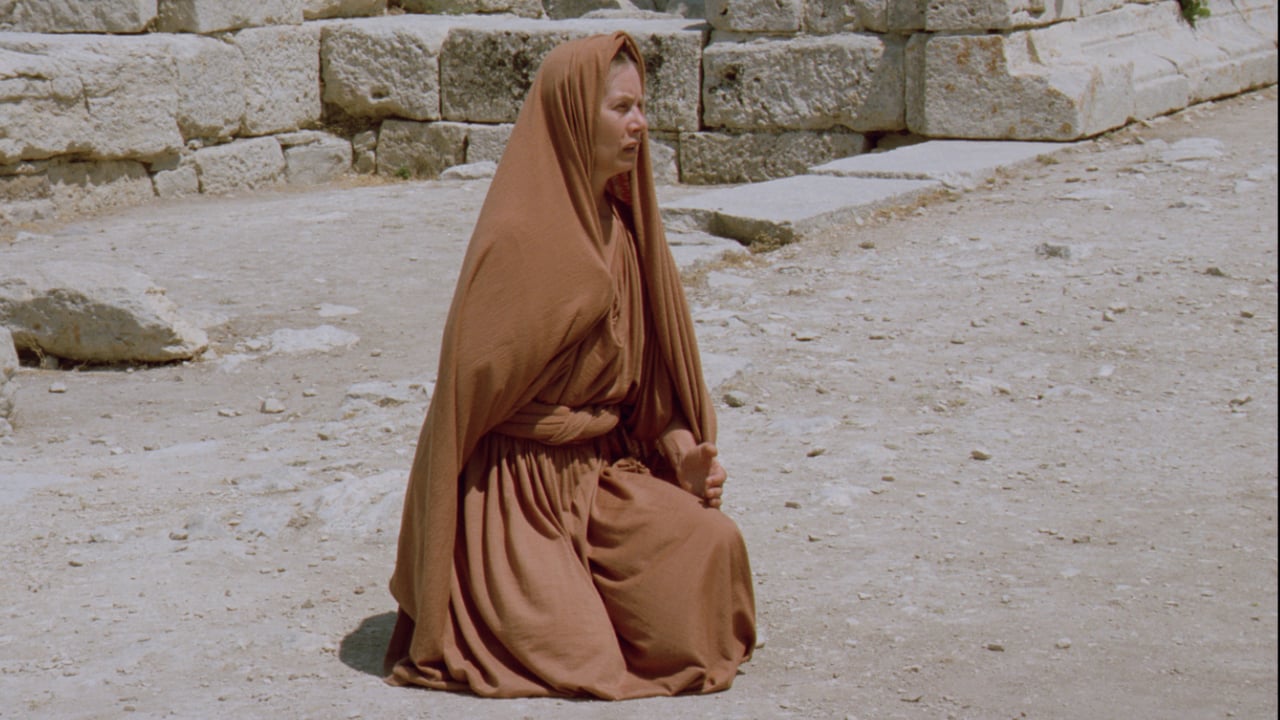
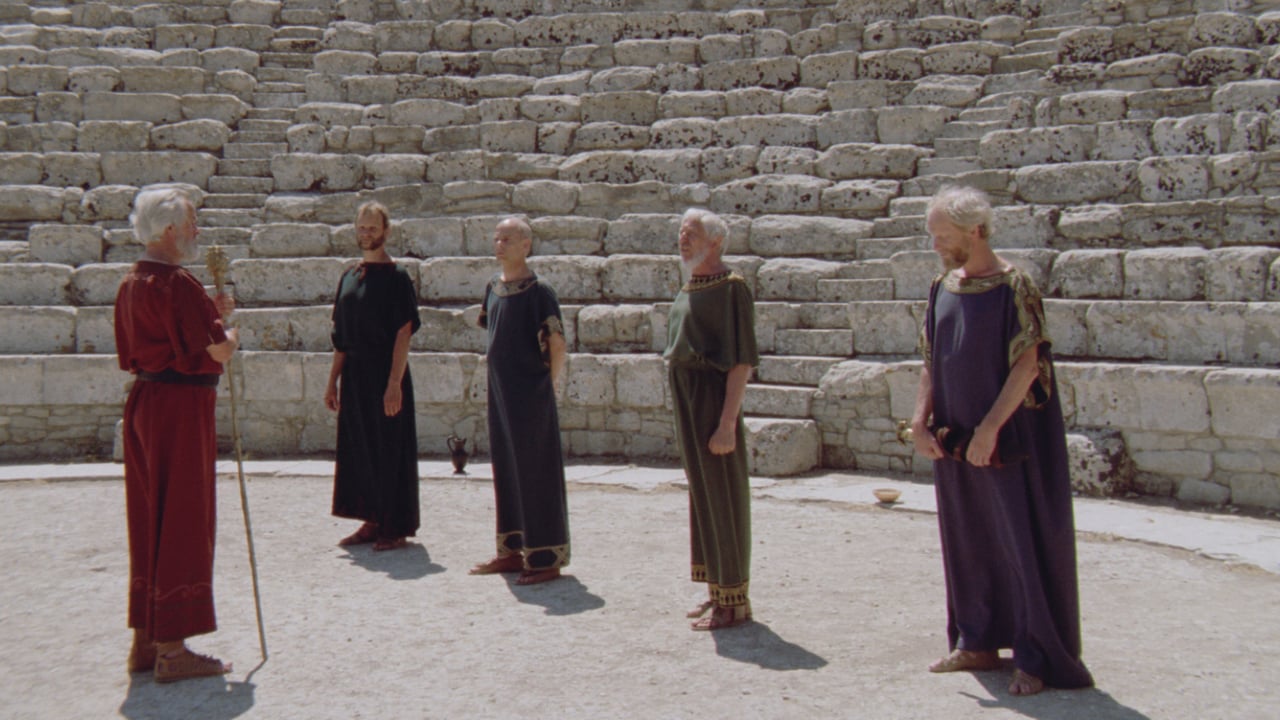
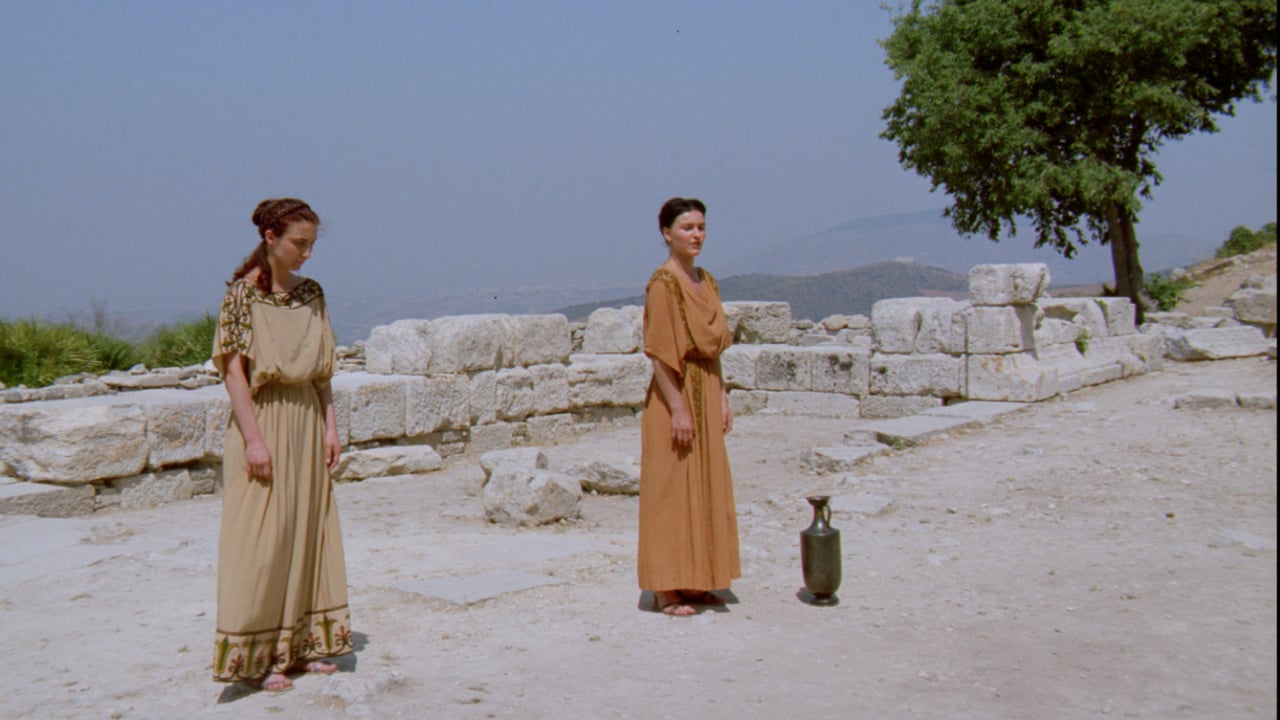
A fearless Antigone, refusing to allow the dishonored body of her murdered brother Polynices to be devoured by vultures and dogs, defies the Thebian tyrant Creon by burying him. In punishment Creon orders Oedipus's rebellious daughter to be entombed alive, lest she sow insurrection among the people.


About the film
Details
- Running time
- 1 hr. 39 min.
- Country, year
- Germany, France, 1992
- Genre
- Drama
- Language
- German
- Subtitles
- Lithuanian, English
- Age rating
- Pegi 13
Credits
- Director
- Danièle Huillet, Jean-Marie Straub & Danièle Huillet
- Screenplay
- Bertolt Brech, Jean-Marie Straub, Danièle Huille
- Cinematography
- William Lubtchansky
- Music
- Michael Gielen
- Cast
- Astrid Ofner, Ursula Ofner, Werner Rehm, Lars Studer, Stephan Wolf-Schönburg, Albert Hetterle, Mario di Mattia, Michael König, Libgart Schwarz Hans Diehl, Kurt Radeke, Michael Maassen, Rainer Philippi
- More information
- www.imdb.com
Festivals and awards
Sponsors and partners
- Supported by
-

Director
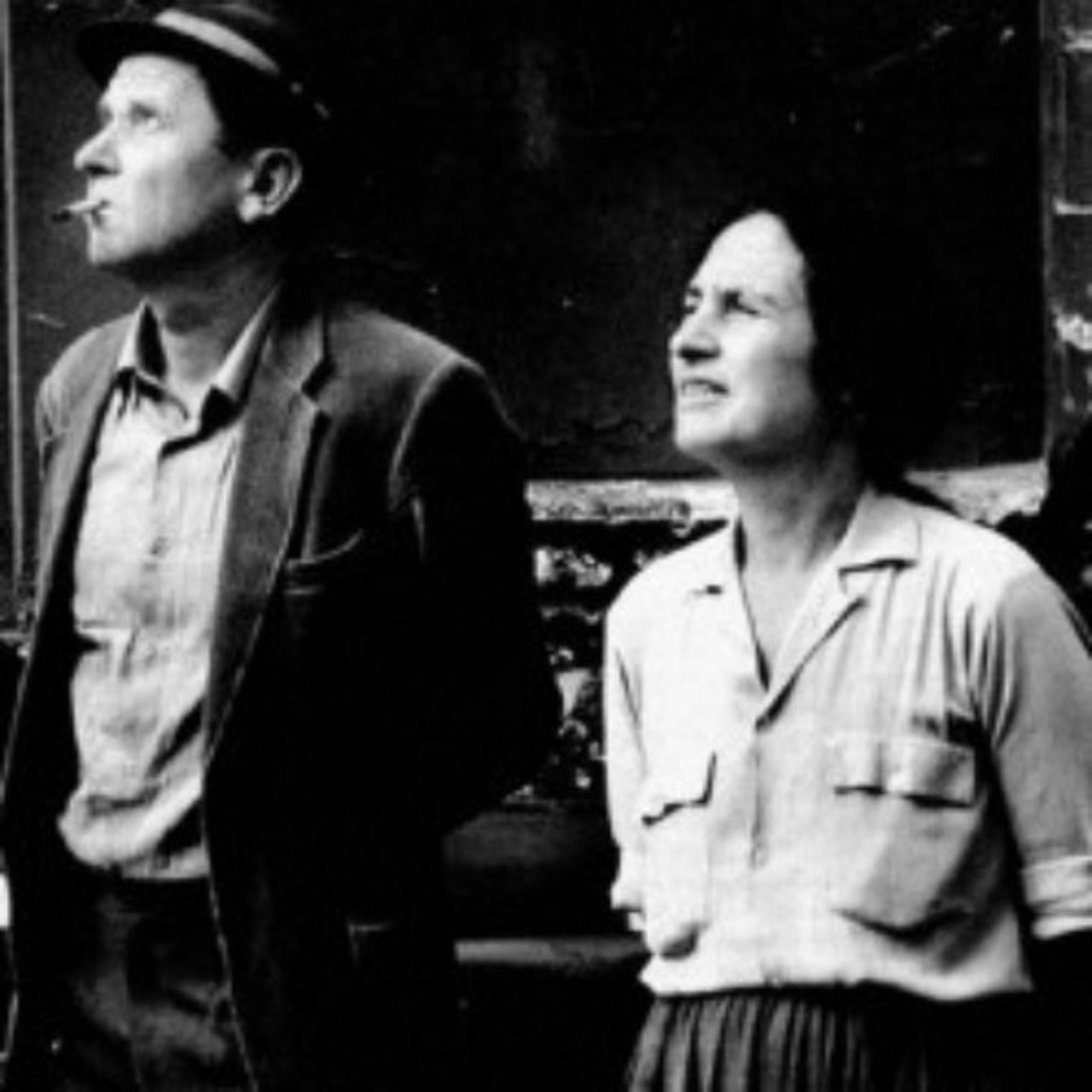
Danièle Huillet
The duo of French directors Jean-Marie Straub and Danièle Huillet is often defined as the most intense and controversial collaboration in the history of cinema.
Nearly inseparable partners since 1954 until the death of Huillet in 2006, they worked intimately on every aspect of film production, from the script to the editing.
They made films adapting the ambitious works of literature, visual arts and music: stories by Böll, Kafka, Duras, and Pavese; poems by Dante, Mallarmé, and Hölderlin; a play by Corneille, an essay by Montaigne, a film by D. W. Griffith, a painting by Cézanne, an opera by Schöenberg; the biography of Johann Sebastian Bach. Extremely attentive to the relationship between the image and sound, the directors used to interpret, rewrite and re-actualize the stories, layering them with the political narrative. Straub-Huillet's films reflect on the lessons of history, discuss imperialism, militarism, resistance and advance the Marxist ideas of the class struggle.
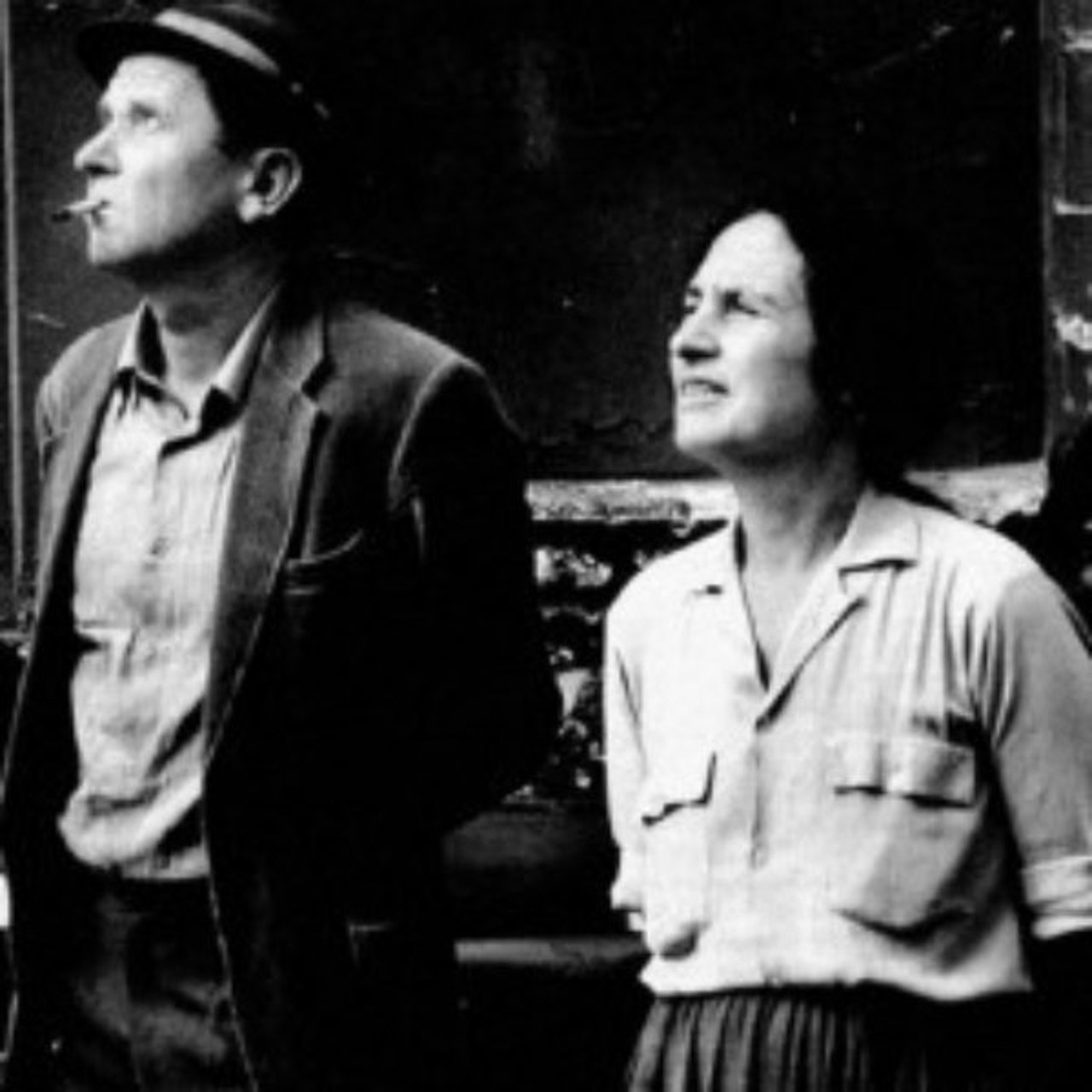
Director
Jean-Marie Straub & Danièle Huillet
The duo of French directors Jean-Marie Straub and Danièle Huillet is often defined as the most intense and controversial collaboration in the history of cinema.
Nearly inseparable partners since 1954 until the death of Huillet in 2006, they worked intimately on every aspect of film production, from the script to the editing.
They made films adapting the ambitious works of literature, visual arts and music: stories by Böll, Kafka, Duras, and Pavese; poems by Dante, Mallarmé, and Hölderlin; a play by Corneille, an essay by Montaigne, a film by D. W. Griffith, a painting by Cézanne, an opera by Schöenberg; the biography of Johann Sebastian Bach. Extremely attentive to the relationship between the image and sound, the directors used to interpret, rewrite and re-actualize the stories, layering them with the political narrative. Straub-Huillet's films reflect on the lessons of history, discuss imperialism, militarism, resistance and advance the Marxist ideas of the class struggle.


